

What to do instead
An embodied education

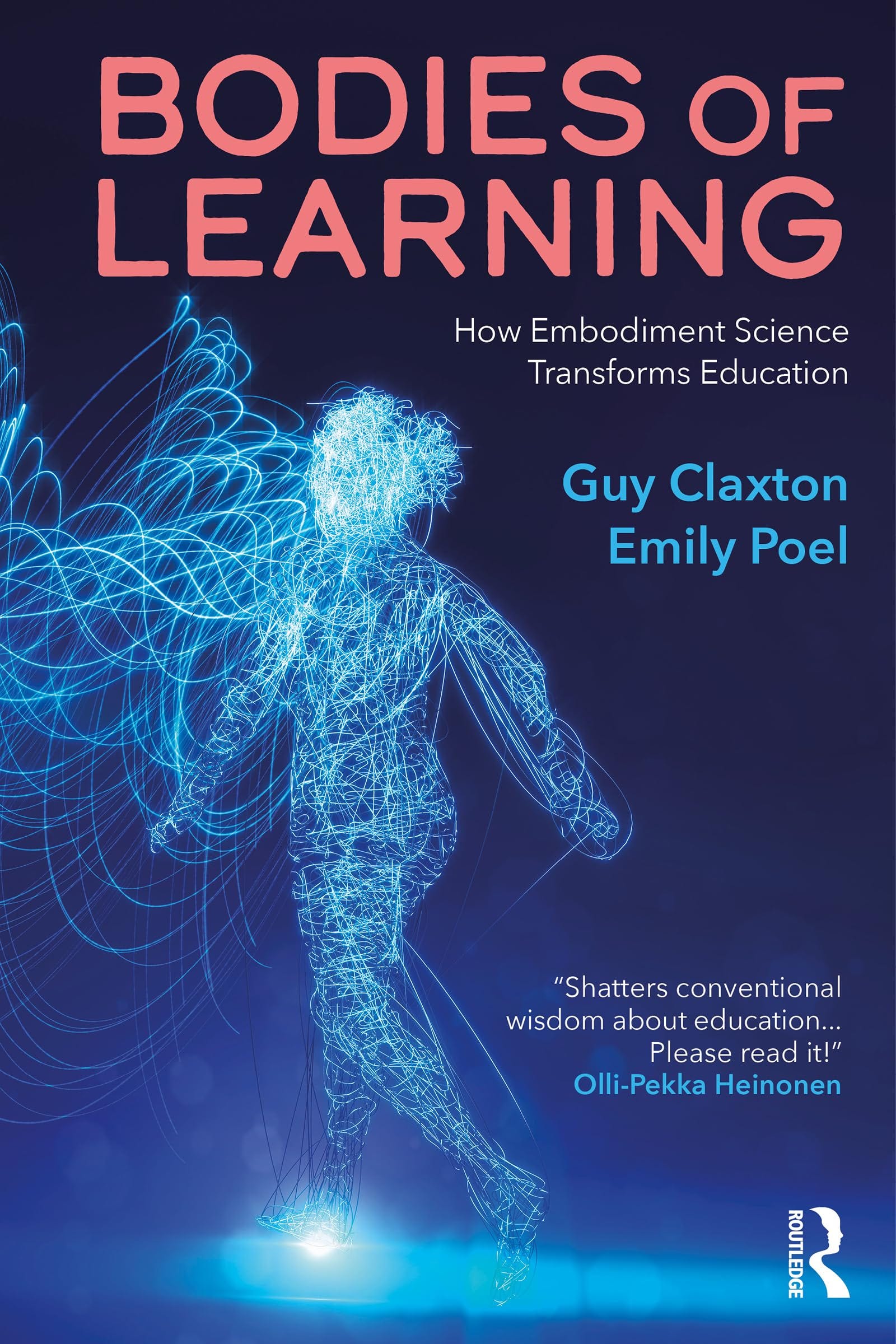
It is with great pleasure that we present a four-post series on embodiment science, written by Guy Claxton. What Guy covers in this series (based on his and Emily Poel’s upcoming book Bodies of Learning: How Embodiment Science Transforms Education) should, we think, help educators in Aotearoa to think critically about ‘the’ science of learning.
What is clear is the argument Guy presents shows there is no ‘the’. What also becomes clear as the series progresses is what our education system loses when engagement with Te Tiriti and mātauranga Māori are made optional.
Here is the final post in the series.
Embodied Dispositions and Character Cultivation
There is widespread agreement that what is missing in traditional education is a firm commitment to fostering aspects of character. Traditional independent schools talked about ‘character building’ by which they usually meant being good at rugby – having team spirit and fortitude – and a degree of intellectual prowess. Today the trend is more towards the prosocial and the epistemic: being a good person (kind, friendly, honest, etc.) and being good with uncertainty and problem-solving (determined, patient, imaginative, resourceful, etc.).
Many people and countries have their own favourite list of such dispositions but there is a good degree of overlap. The is also a range of terms in use to describe what these characteristics are: character strengths, habits of mind, key competencies, general capabilities, learning dispositions, learner attributes, non-cognitive skills, 21st-centry skills, soft skills, and so on. They are all aspiring to map roughly the same territory.
What has been missing till now is the recognition that these are essentially behavioural tendencies; not matters of knowledge or belief but tendencies to act in certain ways in a variety of situations. Honesty is the tendency to hand a found wallet into a lost-property office rather than pocket the cash and cards. Resilience is the tendency to keep going when things turn out to be tougher than you had hoped. Not so much habits of mind as habits of the bodymind.
And the development of such dispositions is not a matter of direct instruction but of immersion in a culture where such behaviours are routinely modelled, noted, mentioned and appreciated. If such character cultivation is to be successful, schools will have to shift from a preoccupation with knowledge transmission to creating an apprenticeship in the moral and epistemic infrastructure of intelligent living; and to a recognition that such an apprenticeship is not a zero-sum game requiring losers as well as winners, but an entitlement for all – regardless of their intellectual proclivity.
Things of the Body vs. Things of the Mind
The Mind-Body Split has encouraged schools to separate ‘things of the body’ from ‘things of the mind’, and to look down on the former and look up to the latter. Discussing, explaining, categorising, calculating, analysing and reasoning are what we value, and the more abstract apparently the better. Fidgeting, feeling tired, looking around, doodling, feeling achy, needing to talk, and personal experience have little to do with ‘proper learning’.
But when you look more closely things are not so clear cut. Developing greater sensitivity to your inner signalling – about levels of energy or stress for example – enables you to pump yourself up or calm yourself down (‘self-regulate’) so you are at the right level of arousal to face a particular learning challenge.
Changing our posture influences our level of both arousal and confidence, for example.
People often think and learn better and more creatively when engaged in some kind of routine movement such as driving a familiar route to work or having a shower.
Physical exercise stimulates the release of a protein in the brain (BDNF) that ‘fertilises’ learning.
Feeling unsafe in a classroom impacts negatively on learning.
Being encouraged to use their hands to gesture enhances students’ ability to explain and develop their ideas.
Abstract thinking – even in maths and science – is often catalysed by using concrete analogies that are grounded in first-hand experience.
Not to mention all those ‘ways of knowing and learning’ that clearly partake of both Body and Mind: emotion, intuition and imagination, for instance.
Different emotions steer learning in different directions; happiness makes you more creative while irritation or sadness makes you more critical.
High achieving people have learned when and how to heed hunches and promptings stirring in the body – and when not to trust them.
Noticing small changes in the conductivity of the skin helps to guide learning.
Middling students who try to put themselves imaginatively into the shoes and mindsets of an A-grade student magically produce higher quality work.
For a whole host of reasons it is more accurate – and more productive – to think of the ‘organ of intelligence’ as being the whole ‘bodymind-in-situ’ complex. Body interacts beneficially with Mind continually and in a wide variety of ways. If you want to be an effective teacher, it is not smart to ignore this research.
Classrooms are Complex Systems
One of the tenets of traditional education is ‘One size fits all (e.g. all 13-year-olds)’, for example). Many school systems cling to this assumption simply for reasons of administrative convenience despite its obvious untruth. Every teacher knows that within any group of 30 kids born in the same year, faced with any subject content, there are huge variations in their levels of knowledge, interest or general intellectual sophistication. They also know that every class quickly develops its own unique culture.
Embodiment science draws heavily on emerging knowledge about the behaviour of complex biological systems. A classroom, like the human body itself, is such a system. Simple cause-and-effect logic does not apply to such systems. They develop idiosyncratic whole-system behaviours that reflect complex and reciprocal interactions between all their elements.
When a system is prodded (‘perturbed’) by for example a teacher, it may react in surprising ways. To attempt to treat a class of students as if it were the sum of its parts, all of which are alike, is to fail to achieve any resonant relationships. Good teachers are sensitive to these systemic properties and correspondingly fluid and responsive in their interactions.
Some Learning Remains Effortful and Abstract
Most teaching benefits from being aligned much more closely with an embodied view of human nature. Learning should be driven by youngsters’ desire to understand ideas and master skills that enable them to do well things that matter to them. But this does not mean that everything should be easy or ‘fun’. Learning often requires hard thinking and deliberate practice. It takes time and effort; it demands the ability to be patient and to recover from setbacks and live through periods of confusion, frustration or doubt. It requires a willingness to take advice and correction, and to work assiduously on the hard parts.
What enables this resilience is holding in mind the goal that you value; to keep reminding yourself that the effort is going to be worth it. Self-belief is necessary. If you don’t think you have what it takes to ‘succeed’ (no matter what that means to you), you won’t do the hard yards.
Traditional schools require, give or take, a third of youngsters to be relative failures. Many of them, rightly or wrongly, do not believe that university or a professional career are for them. They quickly suss out that they are destined to be the losers. So they would be daft to bother, wouldn’t they? Sometimes, unforgivably, children are selected to be losers at education on the basis of their culture or colour .
Re-embodying Embodied Cognition
Our versions of ‘embodied cognition’ and ‘embodied education’ are a bit different from some others. Weirdly, some versions seem to have remarkably little to say about the real body. They seem to remain quite disembodied in tone – perhaps because some scientists, philosophers and commentators are themselves quite deeply committed to and stimulated by a cerebral view of life. Their déformation professionnelle is deeply intellectual so they are almost bound to intellectualise even the body.
No surprise then that their exploration of the educational implications of embodiment tend to be rather superficial, aimed at making conventional academic curricula more palatable or more examination-effective. We, by contrast, have tried to stay close to the lived experiences of bodily life: sensing, feeling, moving, tinkering, imitating, practising, emoting, intuiting, imagining. And this has led us in the book into a much more radical reading of the implications of the science for teaching and learning in schools.
Beyond the Woo-woo
Embodiment science resonates strongly with many aspects of indigenous wisdom. We are not experienced enough to tease out these resonances in any detail, but the parallels are too suggestive to ignore.
Remember the 4Es: Embodied, Embedded, Enactive and Extended. It is hard not to hear echoes of these in the worldviews of First Nations and Indigenous peoples around the world. Often they have a strong sense of physical embodiment. Body and mind work closely together to generate intelligent living.
The sense of being embedded in the physical world, dependent upon the earth for one’s very existence creates and priorities a deep ecological awareness. Being embedded in and dependent on a wide web of social relationships leads to a deep feeling for relatedness and community and a valuing of social grace and competence. Esteeming doing over talking creates a respect for how people carry themselves in the world; their actions speak to others more loudly than their words. Deep practical common sense is ranked more highly than smooth talk or scholarly erudition.
These are just first thoughts. There is a whole book begging to be written on the relationship between the views of human nature and society in embodiment science and in the wisdom traditions. We’ll be the first to pre-order it.
The last few chapters of my new book Lifelong Learning for a Post-truth World touch on exactly those relationships mentioned at the end of this post. Our knowledge systems work is taking us on much the same journey but from a different starting point.