

The Ministry Measures Everything Except This

You learn very quickly that some schools are not held together by systems at all, but by borrowed tools, patched-up spaces, and people running on moral purpose alone.
Sadly, The Teacher Wanted Advert Didn’t Fly Despite the warmth online, despite the shares and the heart emojis and the comments calling us “amazing” and “heroes,” nobody applied for the position. Nobody applied for the exhaustion hidden quietly between the lines.
Because the school that says “yes” sounds beautiful from a distance. It sounds noble. The kind of place where champion hearts gather and children are wrapped in aroha and second chances. And it is those things. But it is also heartbreak. Relentless heartbreak. The kind that sits awkwardly while you microwave your coffee for the fourth time and answer another call about a child who simply cannot cope with the world today.
So the work did what it always does in schools like ours. It dispersed itself across the people already standing there.
Between calls home about forgotten medication, children needing early pick-ups because they were too overwhelmed to stay regulated, support staff needing guidance, de-escalations in corridors, attendance follow-ups, broken friendships, broken routines, broken nervous systems — everybody simply carried more.
By Week Three I was already exhausted. Three Ministry PLD commitments in ten days. SMART Tool administration deadlines sitting there blinking away like little threats on my laptop. SENCO meetings I physically could not get to because there was no one to release me. No one willing. No one available.
That is the part many people still do not understand.
It is not that schools like ours are unwilling to improve. It is not that we reject change.
It is not that we are lazy or resistant or poorly organised. We are simply critically under-humaned. There are not enough adults.
And honestly, sometimes the language we use to soften reality feels exhausting too.
“Dysregulated.”
“Escalated.”
“Overwhelmed.”
Entire dictionaries built to avoid saying what is actually happening. Children carrying trauma so enormous it spills out sideways into classrooms because little bodies were never designed to hold adult-sized pain.
We seriously lack human resources where I teach.
Which is why I physically churn when I hear about millions being poured into glossy maths textbooks destined eventually for landfill bins and recycling skips while schools like ours quietly ration people.
Because people are the intervention.
Not posters.
Not branding.
Not another rubric laminated in colour.
People.
The right adults.
Enough adults.
Regulated adults.
Present adults.
And then, somehow, just when I feel myself sinking too far into despair, another kindred spirit appears.
She should be travelling. Visiting her children overseas. Resting. Living a life she has absolutely earned after years of service. But instead she turns up to help us build classrooms out of almost nothing because she understands the addiction of these places.
Once you truly see what happens inside schools like ours, it becomes very difficult to walk away cleanly. Because leaving starts to feel dangerously close to complicity.
The staffing crisis is not just financial, though the money matters deeply. These spaces are also emotionally hard to staff, spiritually hard to survive in, and almost impossible to explain to people who have never spent six straight hours keeping traumatised children and exhausted adults afloat at the same time.
The kindred spirit and I ended up job sharing twenty-seven children on a knife edge because the teacher from that unanswered advert never arrived. The role simply landed at our feet instead. A full week in that space was emotionally crushing for either of us alone, alongside leadership demands and life commitments already stretching us thin, so we shared both the workload and the emotional weight of it. These children had already lost too many adults throughout their schooling. Neither of us could bear becoming another one.
One day a metal stool snapped in half, not by itself.
The same day the heavy sliding roller doors came off their runners.
The same day spaghetti ended up splattered across the deck while someone screamed they hated everybody.
The room felt too small for what these children carried.
The bodies were big.
The hormones bigger.
The trauma bigger still.
And layered beneath all of that sat abandonment.
This cohort had already lost classroom teachers multiple times throughout their educational journey. Adults coming and going. Promises dissolving. Relationships interrupted before trust could properly settle. They did not trust easily because experience had trained them not to.
So we finally stopped asking whether the children could adapt to the system and started adapting the system to the children instead.
Not through another polished strategic plan or vision statement.
Through action.
Immediate action.
We split the class.
But we also refused to wrap that decision in deficit language.
Those children had already spent too much of their lives absorbing the feeling that they were the problem. We were not going to reinforce it by telling them they were “too much,” “too hard,” or impossible to contain.
So we framed it through agency instead.
More space to learn.
More room to regulate.
More connection.
More support.
Not rejection.
Response.
We scavenged disused furniture.
Cleaners donated whiteboards.
Someone brought drills from home.
Someone else found spare tables.
Another stayed late cleaning.
Another patched together resources from cupboards nobody had opened in years.
“We help each other out.”
That became the unofficial motto.
After hours of scrimping and sweeping and carrying and building, an abandoned space slowly started resembling somewhere children might feel safe enough to learn.
Kind of.
The chairs did not match.
The television barely worked.
There were no pegs for bags.
But none of that mattered.
Because this was not a classroom crafted for an ERO photoshoot or a Ministry promotional video.
This was something far more important.
This was raw.
Built with aroha.
Held together by urgency and instinct and people refusing to give up on children.
By Monday morning thirteen children would walk into that room.
Thirteen children we would not fail.
Thirteen children we would not leave behind.
Thirteen children whose trauma had become too enormous for one teacher and one space to safely contain.
So we changed.
Within twenty-four hours we changed.
No committee.
No consultancy.
No six-month implementation timeline.
Just educators quietly doing what educators across Aotearoa have always done when systems fail to move fast enough: make it work anyway.
And to every kaiako across this country doing the same thing every single day without applause, without headlines, without enough release time, without enough staffing, without enough recognition: That is the curriculum. That is what we teach.
The curriculum lives in every moment a child realises an adult did not give up on them.
Do not let anyone measure your worth otherwise.
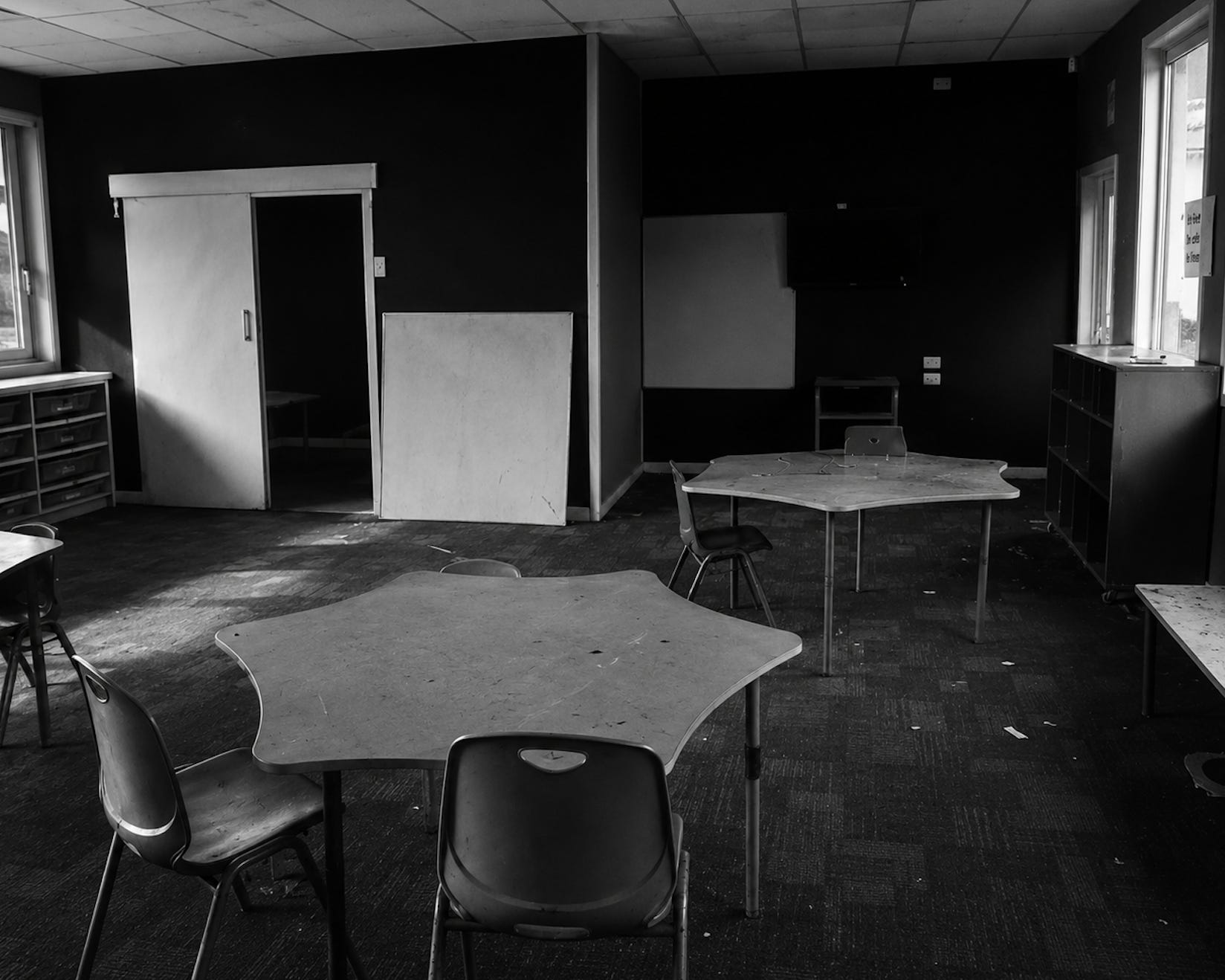
Thirteen kids await…
Kia ora Bee, you shouldn't have to write this, and how incredibly awesome that you did.
We've always had an underfunded, under-resourced education system. Kura Māori have always been even more underfunded and under-resourced.
But there teachers are caring about children in ways that the general public never seems to understand when media and government spin tell them it's the opposite.
You are all sheroes, heroes, theiroes. Me i kore koutou, kua aha kē ngā mokopuna? It's not just the mokopuna either, those whānau out there struggling may not be able to be fully aware of what's happening, but in some way, there is relief for them because of you and what you do.
Yet, there are people who jump into these substack spaces riding their white stallions all pumped up about how structured literacy is the saviour of all and everyone as if it is all that matters...
They've never taught six hours, five days a week, weekends in the classroom figuring what will happen the next week, dealing with the diversity, but they think they have aaaaalllll the answers.
Your answers are human. Thank you for recognising that mokopuna are human and embodied.
It is so deeply sad to read this truthful, written-from-the-heart piece about the realities prevailing in too many classrooms and in the lives of too many children and too many teachers. Profound systemic change is needed, change within the Ministry, and change within political priorities. So I ask, granted that priorities such as jobs, health and housing are real, why isn't Education also up there as a top priority???