

Sunday Read: Hypothesising possibilities ahead: ‘establish strong foundations for learning, well-being and life outcomes’
By Margaret Stuart

If the Vote Education, ECE budget is to be fiscally neutral, what are the funding possibilities? If ECE is the “foundation, if School Principals are frustrated by skills of new entrants, and the government want value for its investment dollars, funding might just be the lever.
Presently government funds through the two major subsidies to Early Childhood Education
Supply- side , the ECE Subsidy and
Demand-side 20 Hours ECE. Family Boost
Around 97% of Ministry of Education administered funding is provided on a universal basis.
Linda Meade, Chair of the ECE Funding Working Group, is strongly trusted by both the ECE workforce and the provider sectors. The former, because she is the daughter of Anne Meade, a longtime advocate for quality ECE practices and a respected academic. And by the provider sector as co-owner of Daisies ECE.

Linda is listening carefully to the feedback from sector meetings and online consultation. There is a permanent page on Ministry of Education’s website.
She emailed attendees at the first Friday 21 November 2025 Funding Working Group hui
We have received a diverse range of inputs to date. Among the emerging themes are:
Trade-offs are being made to remain viable, and these impact on quality (e.g. property maintenance, technology, fewer qualified or experienced staff, staff PLD and mentoring, ratios, non-contact time). This includes the unintended consequences of the Pay Parity scheme.…
Growing numbers of children in ECE with complex needs
More flexibility needed with funded hours (6 hours per day / 30 per week)
The rules are hard to understand, with complex interplay between different funding rules, and also with regulations
Cashflows are highly unpredictable making it hard to budget, and manage costs
Many services use fundraising, philanthropy and volunteer time to subsidise costs so they can offer low/no fees for at least some hours per week, along with providing other services such as vans
,,,Workforce recruitment remains a real issue for many services
WINZ Childcare Subsidy and Family Boost are not working optimally to reduce cost of ECE to families
Equity funding is valued but insufficient
They are due to come back for a final consultation on funding options mid-year.
Public Choice Theory: the proposed economic foundations
PCT [There remains]confusion between public choice theory and human capital theory. Most proponents do not distinguish: they seem to find an unholy mixture of the two quite comfortable to live with. Much education policy has a basis of human capital theory—creating the worker of the future—and endless references to ‘investment’ in education, and in the child as the vehicle for investment which is to deliver tomorrow’s dividends—and this is pure human capital theory. At the same time however there is still the emphasis on ‘choice’—particularly on parental choice. Children are seldom included among the paradigmatic choice-makers. It is this notion of ‘choice’ which justifies charter schools, and the creeping privatisation of public education, from university to preschool. Nesta Devine
I suggest two books
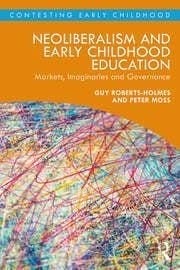
Moss Roberts-Holmes G and Moss P (2021) Neoliberalism and Early Childhood Education: Markets, Imaginaries and Governance. Abingdon: Routledge.
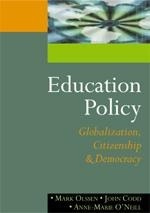
Olssen, M., Codd, J., & O’Neill, A. (2004). Education policy: Globalization, citizenship and democracy. SAGE Publications Ltd.
“Only a crisis - actual or perceived - produces real change. When that crisis occurs, the actions that are taken depend on the ideas that are lying around. That, I believe, is our basic function: to develop alternatives to existing policies, to keep them alive and available until the politically impossible becomes the politically inevitable.” Milton Friedman
Milton Friedman was a monetarist from the School of Economics, Chicago University who captured the ear of Ronald Reagan at a time US was seeking new financial and educational alternatives. Milton and wife Rose wrote Free to Choose(1962) which underpins many conservative state ideas on funding education. In the 1990s members of NZ ACT party linked with the Friedmans for advice and mentoring .
Vocational schooling was a ‘form of investment *analogous to … non-human capital’. The state had no interest in either supporting the individual or any benefits accruing from this education, the Friedmans argued. The state could support individual education apart from that of ‘primary and secondary education … *where+ the three R’s cover most of the ground’ (Friedman, 1955) by offering vouchers as an entitlement (Friedman & Friedman, 1962, p. 86). US bankers and World Bank policy makers enthusiastically took up their ideas. Education is about good investments: individuals grow their capital; aggregated this is the state’s competitive advantage in global exchange.
Voucher allocations?
This coalition government has argued strongly that they inherited an education crisis that they plan to solve. They are taking advice from US and the NZ Initiative on educational policy for 21st Century.
The terms establish strong foundations for learning, and life outcomes are clues to the policy aimed at increasing children’s human capital. Many politician accept that the early years provide the foundations for this.
Facts include:
Early childhood investments increase educational outcomes on average but with substantial variation in results. The magnitude of the benefits depends on the quality of the services provided and disadvantaged children gain more. (New Zealand Treasury Working Paper 25/02).
In an Official Information Act request I recently received Review of Funding Systems for New Zealand’s Early Childhood and Schooling Sectors (31 March 2016) Murray Jack (FCA) said:
There are a number of risks in transitioning from the current models to the preferred model. Some of these are inherent in any significant change, and others are specific to the preferred model…. Moving to a per-student funding model will have implications for some of the central functions in the schooling sector. For example, while an industrial system of central awards and a national payroll system are not incompatible with a per-student funding model there would need to be some changes to processes and systems.
He recommended
efficient unit cost of service delivery approach, albeit using average cost as a proxy initially. It sees staffing entitlements and most other in-kind funding replaced by cash to providers… An individual student funding model will require a focus on building capability at the school level”.
8.2 Recommendations. The recommendations are set out below:
Adopt an individual student funding model for the 0-18 years education system.
Implement the model across the system as follows:
ECE: per-child subsidy
State, State Integrated, Māori Medium, Partnership schools: efficient unit cost per student
Private: per-student subsidy (capped)
Transition per-child-place funding in ECE to per child. Determine subsidy levels by reference to efficient costs of service delivery.
Hovering just over the horizon, I suggest is the SEA :the Student Education Allocation (SEA) which the ACT party campaigned on in 2023. They said “Early Childhood Education will continue to function as it presently does, with funding disbursed through Student Education Accounts. The funding available for Early Childhood Education will be equivalent to that currently available through the 20 hours free program.”(my italics).
The ACT Party in New Zealand has heavily promoted the reintroduction of charter schools (Kura Hourua), which was achieved through the Education and Training Amendment Act 2024.
NZEI Te Riu Roa summarised the ACT party’s policy as of 2023. Here are the key points regarding education funding and the ACT Party’s influence:
Charter Schools (Kura Hourua): The ACT Party, through Associate Minister of Education David Seymour, reintroduced charter schools, allowing privately operated schools to receive public funding.
Funding Mechanism: Charter schools receive a per-student funding amount roughly equivalent to state schools, but with “operational discretion” over how the money is spent.
Budget 2024/2025: The government allocated $153 million for new and converted charter schools over four years.
Charter Schools presently remain an optional choice but there has been an example of an attempted a hostile takeover of a state school, Kelston, Boys High school by a private trust aiming to offer the Charter School option. This may be the first of others, perhaps? 2023 ACT policy promised
“ACT will enable public schools to become partnership schools”
and
“ACT will lay the groundwork for an education environment where parents can exercise more choice, and no child receives a substandard education. Our long-term vision is to provide every child with a Student Education Account parents can use any registered educational institution that will accept their child’s enrolment, public or private”
The funding the government currently spends on education from early childhood to tertiary will be distributed so that every child will have an SEA. Like a KiwiSaver account, parents and students would be able to see the balance of funding that is available and make choices about how to fund an education.
“The SEA will follow a child throughout their educational journey, from early childhood education to tertiary. Extra funding, such as that distributed by the Equity Funding Index or to support disabilities and special needs would also be added to the SEA.
There are clear links with the NZ Initiative members and Education Ministers. Whether through MAG advisors for curriculum or steering the Ministry for Regulation, we can see their influence. Many of them are scathing of left-wing colleagues. In the Vance article, Bryce Wilkinson frequently emailed senior officials attacking critics of the RSB, including public law experts and academics. In an
email to Moss and Wilson, Wilkinson was more scathing: “Our ‘intellectuals’ — like [Jonathan] Boston, [Bill](sic) Easton, [Jane] Kelsey and [Anne] Salmond — are deeply illiberal,” he wrote.
“They write for readers whom they think have been trained, similar to Pavlov’s dogs, to foam at the mouth when they see trigger words like Rogernomes, neo-liberals, profits and capitalism.”
He added: “I do wish the critics would read the relevant academic literature, but no — they just think they know what they are opposing.
Wilkinson had written sarcastically about Labour in NZI newsletter July 2022
Some are concerned that around 40% of school leavers are barely literate. … but again think of how much worse it would be if parents had greater school choice.
We had to shut down partnership schools because too many parents did not understand that state schools were best. Imagine if we told parents which schools were poor performers. There would be chaotic disruption. People need government to protect them from themselves.
The AEC substacks attest to the narrowing of curriculum, to a discarding of earlier work. Critics like Bevan Holloway argue that a
small group of ideologically aligned individuals, most of whom had worked and collaborated together previously, were able to take over the refresh of the curriculum. Their takeover has resulted in most of the work of the hundreds involved in the refresh process over the last four years, including Ministry in-house expertise, being discarded.
ECE is now largely privatised but may be a forerunner of things to come in the state education sector, I muse.
Policies which were not a part of ACT National Parties’ Coalition agreements may be possibly introduced through other means. This could include the B4Five health check being expanded to include discrete skills such as the Act proposal
expanding this check to include specific educational milestones to ensure children are prepared for primary school. The assessment would test whether a child can:
Read and recognise their own name.
Recite or identify the (English) alphabet.
Hold a pencil and pick up a book correctly.
Group items together (e.g., matching animals or shapes).
Could it be that such skills can be the preserve of the “Life-long benefits“ sought by assessments such as Kōwhiti Whakapae? This month a new maths check has been announced, which may be eventually served on ECE?
Water is running rapidly under many bridges. Educators are responding to new education policies on many fronts. Conserving our energies for the coming months is essential. However, we do need to keep a watch on changes by stealth.
Kia kaha tonu
Thanks Margaret. An interesting article tracing some of the emerging threats. Yes, we must be alert.